

A Hea Story
“I'm not a hypochondriac. I just know what can happen.”
Kate's story
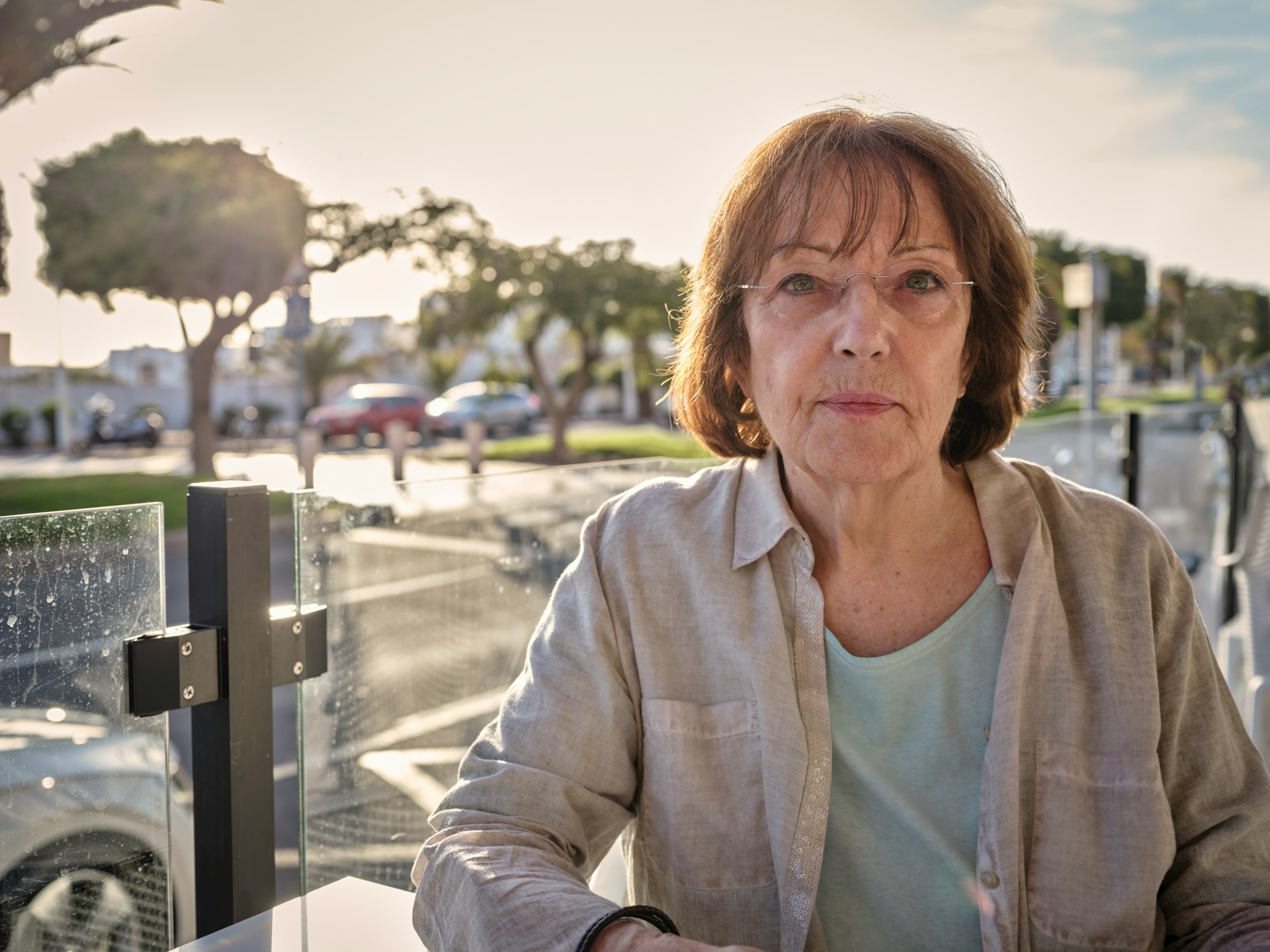
Kate is 48 and lives in Birmingham. She's a teacher, has three kids, and a fairly ordinary life. When she was 24, her dad had a stroke — at work, on a normal Tuesday, with no warning at all. He was 51. He survived, but something shifted in the family after that — in the way they talked about health, and in the way Kate started thinking about her own.
That fear had lived with her for twenty-four years. Not always loudly — it would go quiet for weeks, sometimes months, and Kate would almost forget about it. But the moment something felt off — a numb arm, a dizzy spell, an odd pain in her chest — it came back. Immediately, and in full force.
“I'd go through the same loop every time. First I'd think: this is it, something's wrong. Then I'd talk myself out of it — you're just tired, stop being dramatic. Then I'd feel annoyed at myself for going through it again. And then, after a while, it would start all over.”
Going to her GP with this felt awkward — she'd booked appointments and cancelled them more than once. What would she even say? That her arm sometimes goes numb and she's frightened because her dad had a stroke? Without a clear symptom, without a concrete complaint, it felt more like anxiety than something you take to a doctor.
That night her left arm went numb — for about five minutes, then it passed. She opened Google, saw the first few results and closed it — she knew it would only make things worse. Her husband was asleep. The kids were asleep. Kate sat in the kitchen holding her phone, feeling that familiar thing: I don't know if this is serious, and I don't know who to turn to.
Her daughter had mentioned Hea a few weeks earlier — briefly, in the middle of another conversation. Kate messaged without really thinking, just because she needed somewhere to go.
Hea didn't say “call an ambulance immediately” — and it didn't say “you're fine, try not to worry.” It asked: had the numbness fully gone or was there still something there, had there been any weakness in the arm, was she having any difficulty with her speech or coordination. Then it explained which symptoms would need an immediate call, and which could wait until morning and a GP appointment. And it added: with her family history, it would be worth talking to her doctor about regular blood pressure monitoring — not because something was necessarily wrong, but just to have a proper picture.
“That was exactly what I needed that night. Not panic, not dismissal — just someone who helped me work out what I was actually dealing with. I went to bed at two in the morning feeling so much calmer than if I'd just lain there thinking.”
She hadn't expected to message again. But a few days later her blood pressure was a bit higher than usual — and she did. Hea already knew about her dad, about that night, about her age and what she was worried about. She didn't have to explain any of it again — she could just say what was happening now.
Over time Kate started messaging most days — not always because something had happened, just to note her blood pressure, how she was feeling, how she'd slept. And she started noticing things that had always been there but never registered. That her blood pressure was consistently higher at the end of term when work was at its most intense. That certain weeks she felt worse — and it turned out to be connected to her sleep, not to what she'd been afraid of.
“I finally started to understand my own body — not be frightened of it, but actually understand it. That feels completely different.”
A few months later Kate went to her GP — not because something had happened, but just to talk. She brought along her blood pressure readings from the past few months and a list of questions that had built up. Her doctor looked through everything and referred her for a few additional checks — some of which Kate hadn't even known she was entitled to with her family history.
- She brought three months of real readings to her GP, not a vague impression
- Her doctor referred her for checks she didn't know she was entitled to
- She's learned what's actually connected to her sleep and workload, not just fear
- The background anxiety is quieter now — and she's no longer carrying it alone
The fear hasn't gone away completely — she doesn't think it ever will entirely. But it's different now. Less loud. Less lonely.
“Before, it was this anxiety in a vacuum — you don't know what's normal, you don't know who to ask, and so you just get on with it and try not to think too hard. Now I've got somewhere I can message at any time — at night, at the weekend, whenever. It doesn't take the fear away. But it's not as loud anymore. And I don't feel on my own with it.”
Last year Kate suggested her younger sister try Hea. Same family history, and Kate knew — the same late-night thoughts, the same loop.
Try Hea — from £0.11 a day
Everything Kate has, in every plan
Daily check-ins, your full health history in one place, and a one-page summary before every GP appointment. Your first-month offer ends soon.
Cancel anytime — reply “cancel” on WhatsApp or email support@tryhea.com