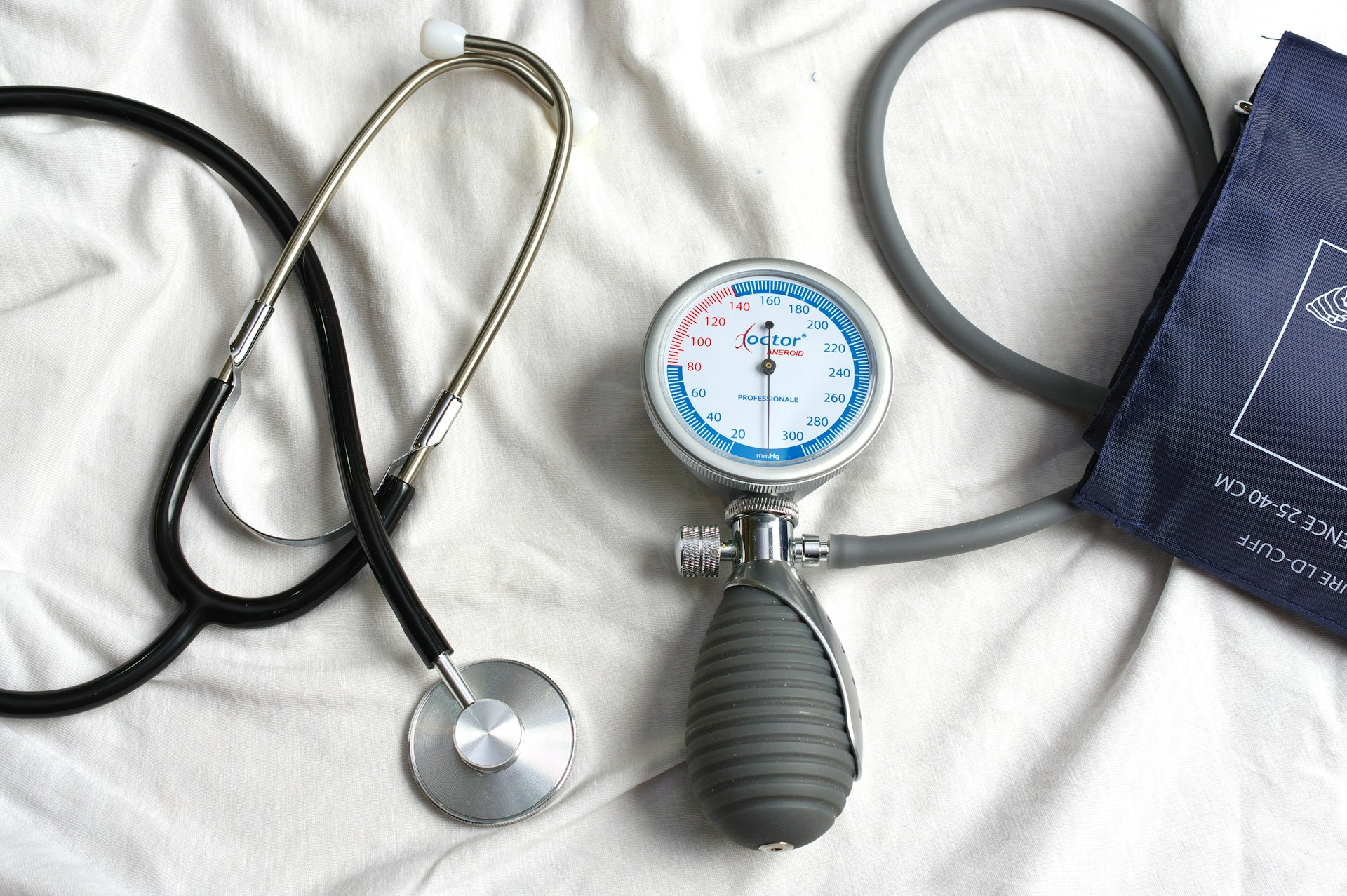


Health · Cardiovascular · Home Monitoring
If you've ever stood in a pharmacy aisle looking at rows of blood pressure monitors, all promising accuracy, all in a fairly similar price range, you'll know how hard it is to tell which one is actually worth trusting.
This guide covers how to choose one properly, how to measure correctly, and what your results actually mean once you have them.
Why home monitoring matters
A single reading taken by a GP in a clinic doesn't always tell the full story. Plenty of people's blood pressure rises simply from being in a medical setting — a well-documented effect called “white coat hypertension” — which can make a reading look higher than it really is day to day. Home monitoring, taken over several days in familiar surroundings, tends to give a steadier, more honest picture.
That's exactly why NICE, in its most recently updated hypertension guideline (NG136, February 2026), recommends home or ambulatory monitoring to confirm a diagnosis whenever a clinic reading comes back raised. A £40–£50 monitor used properly at home can genuinely tell you and your GP more than a single appointment ever could.
The one thing that actually matters when choosing a monitor
Here's the part most buying guides skip over, and it's the part that matters most.
Not every blood pressure monitor on sale is actually accurate. The British and Irish Hypertension Society (BIHS) maintains an official list of validated monitors — devices that have been independently tested and shown to give readings comparable to proper medical equipment. NICE guidance points directly to this list, and it's the same standard used by GPs, nurses and pharmacists.
Before you buy anything
It's worth checking the BIHS website for their current approved list. It takes a couple of minutes, and it's the single most useful thing you can do before spending any money on this.
Upper arm vs wrist — which type to choose
Most validated monitors come in one of two forms: an upper arm cuff, or a wrist cuff.
Clinically, the more reliable choice. Less sensitive to positioning, so easier to get right without realising you've got it wrong.
More sensitive to positioning — if your wrist isn't held exactly at heart height, the result can drift. Reasonable if an upper arm cuff genuinely doesn't fit or isn't comfortable.
That doesn't mean wrist monitors are never appropriate. For people who find an upper arm cuff genuinely uncomfortable, or who have a very large or very slim arm that makes finding the right cuff size difficult, a validated wrist monitor used carefully is a reasonable choice. But if you're choosing without a specific reason to prefer a wrist model, an upper arm monitor is the safer default.
What to check before buying
- Cuff size, not just device brand A cuff that's too small for your arm will consistently read high; too large, and it can read low. Most monitors come with a standard cuff, but many also offer a larger size — worth checking your arm circumference and picking the right one.
- How long the device is expected to last BIHS recommends replacing a home monitor after a maximum of four years of use, sooner if the cuff shows any damage or if you have reason to doubt the readings.
- Price is a genuinely secondary concern Once you've confirmed a monitor is BIHS-validated, price differences between models mostly come down to extra features — memory storage, an app, irregular heartbeat detection — rather than accuracy itself. A £30 validated monitor and a £70 validated monitor should both give you a reliable reading.
How to measure correctly
Technique affects the result more than most people expect, and NICE's own guidance on this is specific.
Sit somewhere quiet, ideally after resting for a few minutes rather than measuring straight after rushing around. Keep your back supported and your feet flat on the floor — don't cross your legs.
Rest your arm on a table or armrest at roughly heart height, rather than letting it hang down or holding it up unsupported.
Avoid caffeine, exercise, or smoking in the 30 minutes beforehand, since all three can temporarily raise your reading.
Stay quiet and still during the measurement itself — talking, even briefly, can push the number up.
Take two readings, a minute or so apart, and use the lower of the two. For an initial check, measure morning and evening for several days, rather than relying on a single reading.
How to read your results
One thing worth knowing before the numbers below: a single higher reading on one occasion is common and not, by itself, something to worry about. What matters is the pattern over several days — which is exactly the point of measuring at home in the first place.
One situation, not the rest
A reading of 180/120 mmHg or higher, particularly with symptoms like chest pain, sudden confusion, or visual disturbance, is the one situation here where you shouldn't simply note it down and wait for your next appointment — seek same-day medical attention.
For most people, day-to-day, this is far less dramatic than it might look on paper. What matters is the trend over time, and that's something worth discussing with a GP rather than interpreting alone.
How Hea fits in
Whatever monitor you choose, actually remembering to use it regularly tends to be the harder part. A monitor gathering dust in a drawer doesn't help anyone.
Hea can send a gentle daily reminder and keep a simple record of what you report, so instead of a single reading from the one morning you happened to think of it, you and your GP have an actual pattern to look at — the kind of picture that's genuinely useful, rather than one good day or one bad day taken in isolation.
A pattern, not a single lucky reading
Hea sends a gentle daily reminder and keeps a simple record — so you and your GP have an actual trend to look at, not one good day or one bad day.
Start your free trial on WhatsAppFrequently asked questions
What is a BIHS validated blood pressure monitor?
A monitor that's been independently tested against a recognised clinical protocol and shown to give readings comparable to proper medical equipment. The British and Irish Hypertension Society maintains the official list, and it's the standard NICE and the NHS point to when recommending home monitoring devices.
Is an upper arm or wrist blood pressure monitor better?
Upper arm monitors are generally more reliable, because wrist monitors are more sensitive to hand and arm positioning during the reading. A validated wrist monitor is a reasonable choice if an upper arm cuff genuinely doesn't fit or isn't comfortable, but upper arm is the safer default otherwise.
What blood pressure reading counts as high in the UK?
At home, a reading of 135/85 mmHg or higher (equivalent to 140/90 or higher in a clinic) is the threshold NICE uses to consider a diagnosis of high blood pressure. This is based on a pattern over several days, not a single reading, and any result in this range is worth discussing with a GP.
How often should I replace my blood pressure monitor?
The British and Irish Hypertension Society recommends replacing a home monitor after a maximum of four years, sooner if the cuff is damaged or you have any reason to doubt its accuracy.
Sources
- NICE, Hypertension in adults: diagnosis and management (NG136, updated February 2026) — nice.org.uk/guidance/ng136
- British and Irish Hypertension Society, Find a Blood Pressure Monitor You Can Trust — bihs.org.uk
- British and Irish Hypertension Society, Validated BP Monitors: Clinical, Policy, and Procurement Guidance — bihs.org.uk
- Scottish Health Technologies Group, Home blood pressure monitoring for people with suspected or confirmed hypertension — shtg.scot